Emergency Dentist Open Now: What Should You Do?
Need an emergency dentist open now? Learn how to respond to tooth pain, a broken or knocked-out tooth, swelling, and when to seek medical care.

If you are searching for an emergency dentist open now, first decide whether you may need emergency medical care instead. Trouble breathing or swallowing, uncontrolled bleeding, rapidly increasing facial swelling, or a serious injury to the face or jaw needs immediate medical attention. For a toothache, broken tooth, or another urgent dental problem, protect the area, avoid unsafe home remedies, and call a dental office for guidance.
Call (770) 230-1890 about urgent dental care
What should you do first when you need an emergency dentist open now?
Take a moment to check your symptoms and your safety. Pain can make it hard to think through the next step, so focus on what happened, when it began, and whether anything is getting worse. You do not need to diagnose the problem before calling.
- Check for warning signs. Difficulty breathing or swallowing, significant facial or neck swelling, heavy bleeding that will not stop, fainting, or a major injury may require emergency medical care. Do not wait for a dental office to open if these signs are present.
- Note the timing and cause. Write down whether pain started suddenly, followed an impact, or began after dental treatment. Note if symptoms are steady, worsening, or triggered by biting or temperature.
- Protect the area. Avoid chewing on the affected side. If there is bleeding, use clean gauze and gentle pressure. A cold compress on the outside of the cheek may help with swelling or discomfort.
- Call a dental office. Briefly describe what happened and ask whether the team recommends urgent evaluation, what to do while traveling, and which location may be appropriate. Phone guidance does not replace an examination.
- Reassess if things change. New swelling, fever, spreading redness, increasing pain, or difficulty opening the mouth deserves prompt professional advice. Seek medical care for symptoms that may threaten breathing or general safety.
Bain Dental & Aesthetics Group provides emergency care in west Georgia. Call to ask about the situation and current availability rather than assuming an office is open or that a same-day visit is guaranteed. The practice’s emergency dental care page offers information to review while you arrange direct guidance.
Which dental problems need urgent attention?
Urgency depends on the problem, its severity, and your overall condition. A small chip without pain is different from a deep fracture after a fall. The examples below can help you explain what is happening, but a dental professional must assess the cause and recommend care.
Severe or persistent toothache
A strong toothache that interrupts sleep, makes eating difficult, or persists despite gentle cleaning should be discussed with a dentist promptly. Rinse gently with warm water. If food may be caught between teeth, floss carefully rather than probing with a sharp object. Do not place aspirin or another medicine directly on the tooth or gums; this can injure soft tissue. Ask a dentist or pharmacist what pain relief is appropriate for your age, health conditions, pregnancy status, and other medicines, and follow the product label.
When calling, describe whether the pain is constant or comes and goes, whether biting makes it worse, and whether hot or cold foods trigger it. These details do not prove what is wrong, but they help the team understand the concern. If pain comes with facial swelling or fever, say so clearly.
Broken, cracked, or chipped tooth
Rinse gently with warm water. If there is bleeding, hold clean gauze against the area with light pressure. Use a cold compress on the outside of the cheek if needed. Save a broken fragment in a clean container if you can, and avoid biting with that tooth. A small chip may have a different urgency from a deep break or an injury involving several teeth, but cracks can be difficult to judge at home. Call and describe the size, pain, and cause rather than deciding from appearance alone.
If an edge is sharp, avoid touching it with your tongue and choose soft foods until you receive advice. Do not file the tooth or try to attach a fragment with household glue. If the damage followed a blow to the face, mention any jaw pain, dizziness, or other injury symptoms.
Knocked-out permanent tooth
Act promptly. Handle the tooth by its crown, the chewing surface, not the root. If it is dirty, rinse it gently with milk or saline if available; do not scrub it or wrap it in tissue. If you can do so without force, place it back in its socket. Otherwise, keep it moist in milk or, if the person is alert and old enough not to swallow it, between the cheek and gum. Call a dentist immediately for instructions and urgent care. Do not attempt to reinsert a baby tooth.
If a child has lost a tooth after an impact, keep it and any fragments out of reach if there is a risk of swallowing or choking. Tell the dental team the approximate time of the injury and whether other teeth or the mouth were hurt. Do not delay a call while searching for a container or trying several home methods.
Dental abscess or facial swelling
A dental infection may involve pain, swelling, an unpleasant taste, or a pimple-like bump on the gum. Do not puncture or drain it yourself. Contact a dentist promptly and explain whether swelling is limited to the gum or spreading across the face. Facial swelling that spreads, fever, or difficulty swallowing or breathing needs urgent medical evaluation. Antibiotics, when appropriate, do not by themselves resolve every dental source; a clinician must assess the cause and suitable treatment.
Lost crown or filling
Keep the restoration if you can find it, and call for advice. Avoid chewing on that side and keep the area clean with gentle brushing. Do not use household glue or other non-dental adhesives in your mouth. If the exposed area is sensitive, avoid foods and drinks that trigger discomfort. Tell the office whether the restoration came out while eating, whether the tooth hurts, and whether a piece of tooth came away with it.
Bleeding after an injury or procedure
For mild bleeding, place clean gauze over the area and apply steady, gentle pressure. If bleeding is heavy, does not ease, or follows a serious facial injury, seek immediate medical care. If it began after a dental procedure, follow the instructions your dental team provided and call if you are unsure. Avoid repeatedly lifting the gauze to check, since that can disturb the area.
What you noticeWhat to do firstWho to contactToothache without swelling or fever.Rinse gently and avoid chewing on that side.Call a dentist and describe the pain.Broken, cracked, or chipped tooth.Save any fragment and avoid biting there.Call a dentist the same day.Knocked-out permanent tooth.Hold it by the crown and keep it moist.Call a dentist immediately.Lost crown or filling.Save the piece and do not use household glue.Call a dentist for instructions.Swelling, fever, or a gum bump.Do not drain it yourself.Call a dentist promptly.Trouble breathing, heavy bleeding, or major facial injury.Do not wait for a dental office to open.Call 911 or go to an emergency department.
When should you go to an emergency room instead?
A dental office is not a substitute for emergency medical services. Call 911 or go to an emergency department for life-threatening symptoms, significant trauma, or signs that the airway may be affected. Examples include difficulty breathing, difficulty swallowing, rapidly increasing swelling in the face or neck, uncontrolled bleeding, loss of consciousness, or a suspected broken jaw.
If the problem seems limited to a tooth or gum and you are otherwise stable, contact a dentist for guidance. If you are unsure whether the symptoms are a medical emergency, choose the safer route and seek immediate medical assessment. Do not drive yourself if you feel faint, confused, or unsafe to travel. For a child or another person who cannot describe symptoms clearly, watch for changes in alertness, breathing, swallowing, and ability to drink, and report what you observe.
There is no need to wait for a dental office callback when a severe symptom is present. You can seek emergency medical care first and have someone contact a dental office once you are safe. If symptoms worsen while you are arranging transportation, call emergency services rather than attempting to manage them at home.
How can you manage discomfort while you arrange care?
Temporary steps may reduce irritation, but they do not identify or fix the cause. Keep care simple and avoid chemicals, sharp objects, or unverified remedies in the mouth.
- Rinse gently with warm water to clear the mouth. Do not swish forcefully if you are bleeding.
- Apply a cold compress to the outside of the cheek for short intervals. Do not put ice directly on the tooth or skin.
- Choose soft foods and avoid very hot, cold, sweet, or hard foods if they trigger pain.
- Brush gently around the area unless doing so worsens bleeding or pain.
- Ask a dentist or pharmacist about medicines that are safe for your circumstances. Follow the product label and do not combine products without checking their ingredients.
- Do not place aspirin, alcohol, concentrated oils, or unprescribed medication directly on a tooth or gum.
For example, if a tooth hurts only when you bite, avoid testing it repeatedly with food. If cold drinks trigger pain, choose room-temperature fluids for now. If the cheek is swollen, a cool compress outside the mouth is a safer temporary measure than applying heat or pressing on the swelling. These steps are a bridge to professional advice, not a reason to delay care for worsening pain, swelling, fever, or injury.
Keep track of anything you take and when you took it. That information can prevent confusion when you speak with a dental team or clinician. If you have a condition that affects bleeding, take prescribed medication, or have an allergy, mention it before following medication advice.
What should you tell the dental office when you call?
A clear, concise description helps the team understand what kind of guidance you need. You do not have to know the diagnosis. Use a short sequence: what happened, when it happened, what symptoms you have now, and what you have already tried.
- Your name and a number where the office can reach you.
- Which tooth or part of the mouth hurts, if you can identify it.
- When the problem began and whether it is getting worse.
- Whether there was an injury, and what happened.
- Any swelling, fever, bleeding, difficulty swallowing, or difficulty breathing.
- Relevant health conditions, allergies, medicines, and recent dental treatment.
- Whether a tooth, filling, or crown came out, and whether you saved it.
A useful call might sound like this: “My upper left tooth broke while eating about an hour ago. It hurts when I bite, but I can breathe and swallow normally. I saved the fragment and have not taken anything yet. What should I do, and can someone advise me about being seen?” Keep the description factual; do not minimize symptoms, but avoid guessing at the cause.
Tell the office if you already took medication or tried a home remedy. If you have trouble breathing or swallowing, do not wait on a routine callback; seek emergency medical care. Ask what location to contact, whether the team can provide immediate advice, what to bring, and what to do if the office cannot see you soon.
What can you expect at an urgent dental visit?
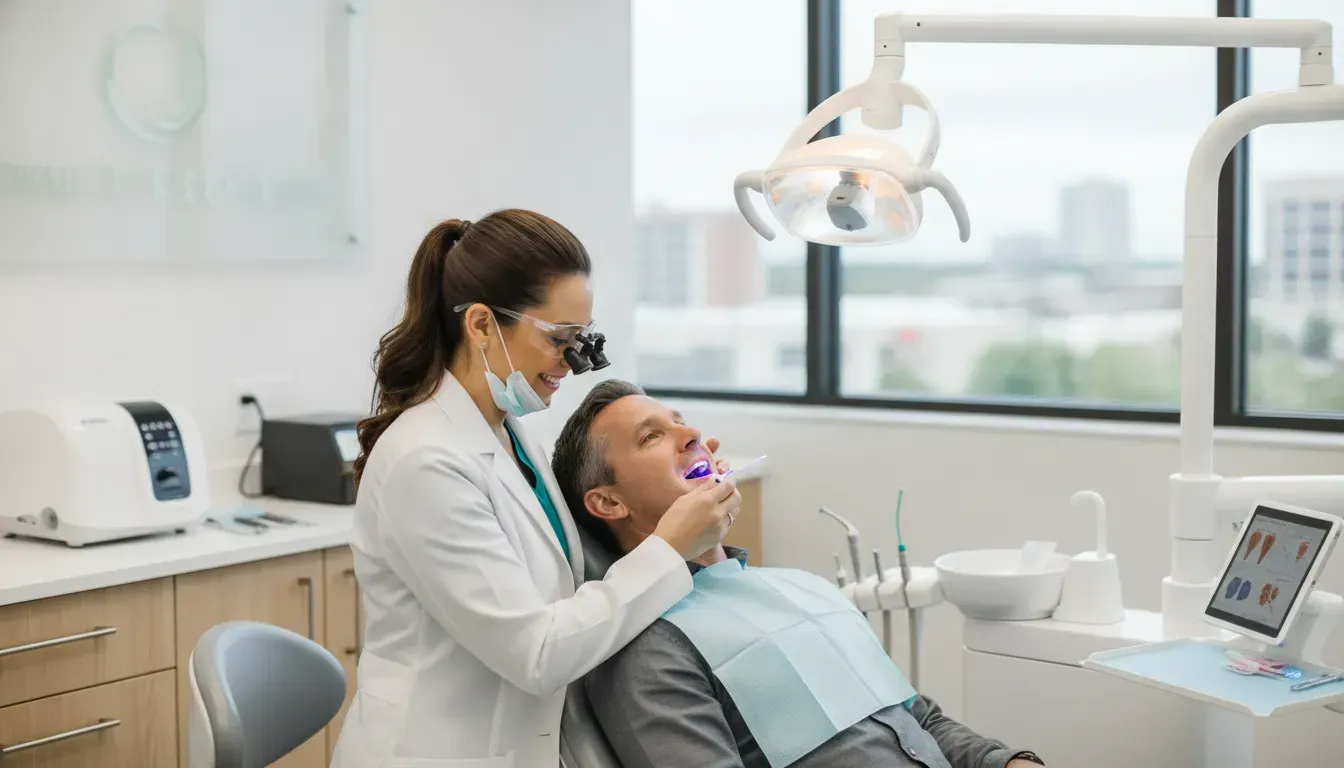
The dental team will ask about the problem, review relevant health information, and examine your mouth. Depending on the concern, the dentist may recommend imaging or other diagnostic steps. The goal is to understand the cause and discuss appropriate care. Treatment depends on the tooth, extent of damage, your health, and findings at the visit.
Urgent care does not always mean every part of treatment can happen during the first visit. The immediate priority may be evaluating the problem, addressing the source where possible, and planning follow-up. Ask what the next step is, how to care for the area at home, and which changes should prompt another call or immediate medical attention.
It can help to ask questions in a simple order:
- What did the examination show, and what remains uncertain?
- What needs attention today, and what can wait for a planned visit?
- What are the available treatment options and their benefits or limitations?
- What should I avoid eating or doing until follow-up?
- Who should I contact if pain or swelling changes?
Bring a list of medicines and allergies, and mention recent treatment. If you are anxious or need help understanding the explanation, ask the clinician to restate the plan in plain language. You may also ask for written instructions so you can review them later.
At Bain Dental, Dr. Brian Bain, DDS, is the founder and a general dentist. The practice also includes Dr. Michael Hanley, DMD, a general dentist, and Dr. Brittney Barrow, DMD, a board-certified oral and maxillofacial surgeon. The clinician involved depends on your needs and the care being considered. Learn about the Bain Dental doctors and the practice’s dental services.
How do you find an emergency dentist open now in west Georgia?
Search results and business listings may not reflect real-time availability. Call directly to confirm whether the office is open, whether the team can advise you, and what to do if no appointment is available. State that the problem is urgent and describe swelling, bleeding, injury, or severe pain. Do not assume a listing’s hours confirm that a clinician can see you.
Bain Dental & Aesthetics Group serves Bowdon, Carrollton, Villa Rica, and nearby west Georgia communities. The practice has three locations:
- Bowdon: 429 Mitchell Avenue, Bowdon, GA. Phone: 770-258-5516.
- Carrollton: 831 Dixie Street, Carrollton, GA. Phone: 770-832-9668.
- Villa Rica: 427 W. Bankhead Hwy, Villa Rica, GA. Phone: 770-456-2550.
Call to confirm the appropriate location and current availability before traveling. If no office can see you, ask what to do next and seek emergency medical care for severe or potentially dangerous symptoms. For general oral-health information, the American Dental Association offers patient information at ada.org; direct professional assessment is still important for urgent symptoms.
When comparing the next steps, separate the location question from the health question. A nearby office may be convenient, but a medical emergency should go to emergency services first. If you are stable and the problem is dental, ask which office can provide guidance and whether you should travel there or take another step. This prevents a long drive based only on an outdated listing.
It may help to write down the phone number and address you were given during the call, along with the name of the person who advised you and any instructions. If another family member is driving, share the symptom summary and the destination before leaving. Bring the affected tooth or restoration if requested, but do not delay urgent care to gather nonessential items.
How can you prepare for the call and visit?
Gather useful details without delaying care. Bring a list or photo of medicines and allergies, insurance information if applicable, and any broken restoration or tooth fragment you saved. If an injury caused the problem, note when it occurred. If you are helping a child or another person, share their age and relevant health conditions. If the problem started after a recent exam, a cleaning, or another routine visit, mention that timing when you call; the general dentistry team can use that history when they advise you.
Before leaving, confirm the location and any instructions the office gave you. If you are driving, make sure you are alert enough to do so safely. Someone who is faint, confused, in severe pain, or experiencing a serious injury should not drive alone. If symptoms become dangerous, switch to emergency medical care.
For a younger child, keep small objects such as a knocked-out tooth out of reach to prevent swallowing or choking. Do not put a loose tooth in a child’s mouth for safekeeping. The dental team can tell you how to handle it. If a child has breathing difficulty, significant injury, or heavy bleeding, seek emergency medical care.
For an older adult or someone with limited mobility, plan for assistance getting into the office and bring any relevant medical information. Do not give food, drink, or medicine contrary to instructions from a clinician. If you are unsure what is safe, ask before traveling.
How can you avoid common mistakes while seeking urgent care?
In a stressful moment, well-meant actions can make the problem harder to manage. Avoid these common errors while arranging professional guidance:
- Waiting because the pain temporarily eases. Symptoms can change, and relief does not prove the underlying problem is resolved. Call if the pain was severe, returns, or comes with swelling or injury.
- Trying to repair a tooth at home. Do not glue a crown, force a fragment into place, file a sharp edge, or puncture a gum swelling. Those steps can cause additional injury.
- Using a medicine without checking suitability. Age, health conditions, pregnancy, allergies, and other medicines can affect what is appropriate. Follow the label and ask a qualified professional when uncertain.
- Driving to an office without confirming. Call first if it is safe to do so. Ask whether the office is available and where you should go.
- Describing only the pain score. Include timing, injury, swelling, bleeding, fever, and breathing or swallowing changes. Those details help distinguish a dental concern from warning signs needing medical care.
These reminders are not a substitute for examination. Their purpose is to help you avoid adding risk while a qualified professional guides the next step.
Call (770) 230-1890 about urgent dental care
Frequently asked questions about urgent dental care
Should I wait until morning for a toothache?
It depends on the symptoms. Severe or worsening pain, swelling, fever, or a recent injury calls for prompt professional advice. Trouble breathing or swallowing, spreading swelling, or uncontrolled bleeding requires emergency medical care. Call a dental office and describe the situation instead of deciding based only on the time of day.
Can I go to the emergency room for tooth pain?
Yes. Seek emergency medical care for serious symptoms such as difficulty breathing or swallowing, major facial trauma, uncontrolled bleeding, or rapidly spreading swelling. For a tooth problem without these warning signs, contact a dentist because dental evaluation may be needed to address the source.
What should I do if a tooth is knocked out?
For a permanent tooth, hold it by the crown, keep it moist, and contact a dentist immediately. Rinse gently if dirty, but do not scrub it. If you can place it back in the socket without force, do so; otherwise keep it in milk or another suitable moist environment while getting urgent guidance. Do not reinsert a baby tooth.
Does a chipped tooth always need same-day care?
Not every chip has the same urgency. A small chip without pain may be less urgent than a deep break, severe pain, or damage from a significant injury. Call a dentist, explain what happened, and follow the guidance you receive. Avoid chewing on the damaged tooth.
Can I use glue to put a crown back on?
No. Do not use household glue or other non-dental adhesives in your mouth. Save the crown if possible, avoid chewing on that side, and call a dentist for instructions.
What is the next step?
If you need an emergency dentist open now, call and describe your symptoms so you can get direction for the next step. Contact Bain Dental & Aesthetics Group in Bowdon, Carrollton, or Villa Rica to ask about urgent dental care; for breathing or swallowing difficulty, severe injury, or uncontrolled bleeding, seek emergency medical care immediately.